The Money Goes First
Why money is the first thing they came for

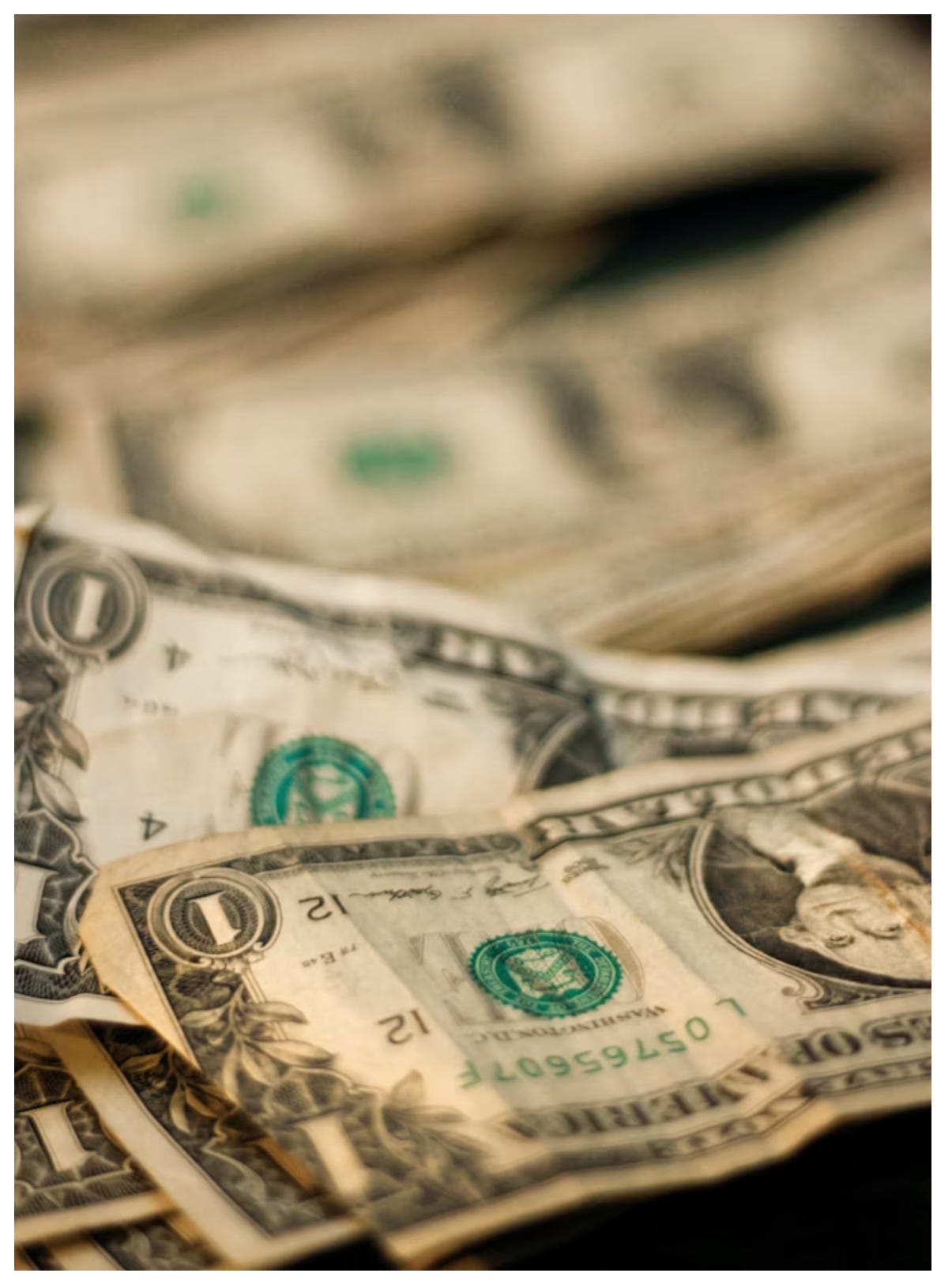
Cash clears without asking. That is the thing we are about to lose.
The Permission Society · Part II
In a few weeks this spring, two pots of money were frozen.
One belonged to a sanctioned government. The world was divided.
The other belonged to a woman with a small online shop. She had done nothing, and no one noticed.
The same power switched off both. It does not ask who you are.
Start with her. She runs the shop alone, and she had just had her best stretch of sales in years. On Monday she opened her account to pay her suppliers, and the money was gone. Frozen.
There was no theft and no charge. Only a form email about unusual activity, and a balance she could no longer touch. Tens of thousands of dollars, held for a hundred and eighty days. Some she would never see again. She broke no law. Thousands like her are now names on a class-action suit.
We have learned to shrug at this. A processor froze the money; call them, wait, hope. Somebody else’s bad luck.
Hold it next to the oldest object in your wallet.
There is a paper note in your pocket that asks no one’s permission.
Hand it to a stranger for a coffee. The coffee is bought. No one is consulted. No server checks a list. No company approves the transfer. The note changed hands, and that was the whole of it.
This is so ordinary that we have stopped seeing it. A dollar bill is one of the last objects in your life that does what you tell it, the moment you tell it, without asking.
That is ending. Quietly, and mostly with our consent.
In March of this year, a company called Circle received an order from a court in New York. The order was sealed; the public could not read it. Acting on it, Circle reached into the digital dollars it issues and froze sixteen business accounts at once.
The businesses were not cartels. They were exchanges, payment firms, a foundation’s software contract. No one had been convicted of anything. A judge signed a paper, the paper named some wallets, and the code did the rest. Several of the frozen had broken no law. A few were quietly thawed later, after the complaints came in.
Hold those two pictures side by side. The bill that asks no one. And the dollar that can be switched off by a sealed order, from a desk, for businesses that did nothing.
That is the subject of this essay. Not crypto. Not the price of anything. Money itself, and what it is becoming.
I ended the last piece on a line: money is the rail everything else rides on, and the first thing they came for. This is why.
* * *
Let me be plain about the thing itself.
A stablecoin is a digital dollar. A private company takes real dollars, holds them in reserve, and issues you a token meant to be worth a dollar, always. You can send it anywhere, instantly, day or night. In most ways it is a better dollar.
It is also a programmable one. That word is the whole story.
A paper dollar is dumb. It cannot be told what to do. It has no memory, no rules, no opinion about who holds it or why. That dumbness is its freedom.
A programmable dollar is not dumb. It is a small piece of code. Before it moves, it checks. Is this sender allowed? Is this receiver allowed? Only if the answer is yes does the money go.
Most days, for most people, the answer is yes, and you never see the question being asked. But the question is always being asked. That is the change. The dollar has gone from a thing that obeys to a thing that asks.
Call it what it is. Permission money.
The biggest of these dollars has a function in its code named destroyBlackFunds. Remember the name. We will come to what it does.
* * *
Now let me give the other side its due, because it is owed, and because much of it is true.
The old way of moving money is bad, and I say that as a man who spent forty years inside it. A wire crosses a border by crawling through a chain of banks, each taking a cut, each closed on weekends. To send two hundred dollars home, a worker pays more than six percent on average. Through a bank, the toll climbs to fifteen. The poor pay the most to move the least. That is not a small injustice. It is a tax on the people who can least afford one.
The digital dollar erases it. It settles in seconds, for a fraction of a cent, at three in the morning on a Sunday. A man in Lagos can be paid by a client in London before either of them finishes their tea.
This is no longer a fringe experiment. Visa is now settling around seven billion dollars a year across these rails, quietly, for ordinary merchants. And the next users may not even be people. Software has begun to pay software, with no human pressing a button. Whatever money is about to become, it is being built right here, in this object that asks permission to move.
And where the local money is dying, the digital dollar is a lifeline, not a toy. In Argentina, the peso lost most of its value, and the government rationed access to real dollars. So families keep their savings in digital dollars, bought in cash-filled back rooms. In Turkey, after the lira fell, the digital dollar became one of the most-held assets ordinary savers reach for. These are not speculators. They are people trying to keep their wages from melting in their hands.
And it even serves the state. Every digital dollar is backed by Treasuries, so Washington wants this too. The state, the companies, and the man in Lagos all want the same thing. That is what makes it so hard to stop.
I want to be clear, because the rest depends on it. This is real good, done for ordinary people. The men building it are not, for the most part, villains. If the digital dollar were only a trap, it would be easy to refuse. It is not only a trap. That is exactly the difficulty.
This is the first room. I have sat in it. The people there are clever, and mostly sincere, and often right.
Even its critics mostly worry about the wrong danger. They warn it could collapse: a run, a panic, a bailout. Maybe. But that is the old kind of danger, the kind we know how to name. Mine is quieter. It is not that the money breaks. It is that it works perfectly, and does exactly what it is told.
* * *
Now the turn.
The paper dollar in your pocket is a bearer thing. Possession is the whole of ownership. Hand it over and the matter is closed.
The digital dollar is not a bearer thing. It is a claim. You do not hold a dollar; you hold a promise from a company that it will give you one. And the promise lives on a ledger the company controls.
How tightly does it control it? Of all the people and firms holding these digital dollars, only a select group of institutions has a direct line to the issuer. The right to walk up and redeem at face value. Ordinary holders do not have it. With Circle, an individual cannot become a direct customer at all. Everyone else holds a claim on a claim. A second-hand promise, passed from hand to hand, redeemable directly by almost no one.
Set the two side by side. Cash: no one can stop it, final on delivery, with no one to ask. A digital dollar: the issuer can stop it, not at your account but at the level of the money itself. A frozen digital dollar is frozen in every wallet on earth at once.
So when the dollar asks permission before it moves, whose permission is it asking? Not yours. The issuer’s. And behind the issuer, the state.
This is not a figure of speech. It is the literal order of operations. Every time one of these dollars moves, the code runs a check first. Is this address blocked? Only then does it release the money. The transfer you picture as handing over cash is, underneath, a query to a private database. Asked and answered before anything happens.
The dollar consults a list about you before it agrees to leave your hand.
* * *
This is not hidden. It is written into the law, in the law’s own words.
Last year the United States passed its first federal statute for these digital dollars, the GENIUS Act, signed in July. Most of it is sensible plumbing — reserves, audits, disclosure. Set into it is a requirement that every issuer be able to obey what the law calls a “lawful order.”
A lawful order, the statute says, is one that requires a company to “seize, freeze, burn, or prevent the transfer” of its dollars.
Seize. Freeze. Burn. That is the actual text. The power to reach into your money and end it is not some dark feature a rogue engineer might one day add. It is a condition of the license. You cannot legally issue a digital dollar in America unless you can switch it off.
And the switch is real, down to the line of code. Now, destroyBlackFunds. It is Tether’s, and it does what it says. It takes an address, sets the balance to zero, and erases the money from existence. No private key required. No bailiff at the door. A command, run on a public network, in the time it takes to read this sentence.
We have watched it used at scale. In April, at the Treasury’s request, Tether froze three hundred and forty-four million dollars in accounts tied to Iran. It was done in a day. In the old world, freezing a hostile state’s money meant months of letters between central banks. Now it is a function call.
When the target is a sanctioned government, the freeze is easy to accept. Hold that thought. We will need it.
The reach is also widening. A new Treasury rule this spring would widen the net. Issuers would screen not just the customers they deal with directly, but transfers between strangers, far out in the open market. The permission layer is not meant to sit at the door of the bank. It is meant to travel with the money, wherever it goes.
There is a second move here, quieter than the freezing, and in the long run more important. The cash itself is being pushed out. In 2023, Nigeria’s central bank pulled most of the country’s banknotes from circulation almost overnight, trying to herd its people onto digital money. For weeks, ordinary Nigerians could not buy food or fuel. The cash was gone, and the digital rails buckled under the weight. It was sold as modernization. What it showed was simpler. Once the dumb, permissionless option is taken away, you are left only with the kind of money that asks. The freezing is the visible danger. The quiet retirement of cash is what will make the freezing matter.
Notice the speed. The law was signed in July. The code was already written. By spring the freezes had begun. This did not take a generation. It took a year.
* * *
Here is where I land, after all the fairness I can muster.
The good is real, and I would still not make this trade.
We are taking the one ordinary object that did what we told it, and replacing it with one that does what it is told. We are doing it because the new one is faster and cheaper, and it is. In exchange, we accept a switch into the base layer of daily life. And we hand that switch to a few private companies, and to the government that licenses them.
I do not think most of the people building this intend tyranny. I have sat in the rooms where these things are drawn on whiteboards. They intend efficiency. They intend to stop criminals and sanctioned regimes, and they will, and we will applaud.
But a switch does not care why it was built. It knows only the rule it is given, and the hand that will write the next rule. We are building it to stop the worst of us. It will work just as well on the rest of us. That is not a claim about anyone’s character. It is a fact about the machine.
The day it happens to you, you will not be a criminal or a dissident. You will be someone whose rule changed overnight.
You have met a smaller version of this power — the woman whose shop money was frozen, the creator cut off overnight. We learned to shrug. The programmable dollar takes that scattered, ad-hoc power, the bank’s and the processor’s, and builds it into the money itself. Everywhere, switched on by default. That is permission money: the freeze she suffered once, by accident of policy, made total and automatic and built into the coin.
There is a turn here that is easy to miss, and it cuts against what most people expect. We were told the danger was a government digital dollar, the state watching every purchase from its own ledger. America has, for now, turned that down; a central bank digital currency is barred by executive order, and the House has voted to ban it outright. We congratulated ourselves.
But look at what we built instead. The same switch, the same freezing and burning, the same surveillance of the flow of money. Only now it sits inside private companies, acting on the state’s orders. A government ledger would at least be bound by the Constitution, by the protection against unreasonable seizure and the right to due process. A private company is bound only by its terms of service. And those terms reserve the right to freeze your money, in their own words, at their sole discretion. We did not refuse the surveillance state. We outsourced it, and stripped it of its constitutional restraints on the way out.
Tocqueville saw the shape of this, in a gentler century. He warned of a power that would not break men’s wills so much as soften them. An orderly, provident authority. One that people accept willingly, because it spares them the burden of choosing for themselves. A servitude that arrives wearing the face of convenience. That is what this is. No one will seize our money from us. We will hand over the right to spend it freely, for speed and a few cents saved, and we will be grateful for the service.
And ours is the mild version.
Tocqueville’s soft despotism belongs to the comfortable democracies, where a court still has to sign the order and a constitution still, on paper, draws a line. Most of the world has no such brakes. The same rail is being laid in countries where the courts answer to the ruler and the constitution is a decoration. There, the switch will not be saved for foreign regimes under sanction. It will be turned on the dissident, the protester, the minority, the inconvenient. The code does not change at the border. Only the restraints do, and across much of the world there are none.
And here is the bitter part. The people the digital dollar rescues from their own broken money — the family in Buenos Aires, the worker in Lagos — are the same people left most exposed when the switch is turned the other way. We are building the most precise instrument of financial control in history, and handing it, rail and all, to governments that have never once been told no.
* * *
Let me say plainly what this does not mean, so no one can wave the argument away.
It does not mean every freeze so far has been wrong. Stopping an outright thief is easy to defend. But a sanctions list is written by a government. Who goes on it, and who decides, is its own political fight. The power to freeze is only ever as just as the hand that writes the list.
It does not mean there is a plot. There is no need for one. Each step is useful, legal, and defensible on its own. That is precisely why no one will stop.
What it does mean is narrow, and I think it is enough. The power to freeze, seize, and erase any dollar is now standard, legal, and in routine use. It was built for the guilty. It is available against everyone.
* * *
So go back to the note in your pocket. The dumb one. The one that asks no one.
Soon it will be the strange one, the relic your grandchildren find quaint, the way we find a gold coin quaint. The dollar they spend will be quick and clean and clever, and it will ask permission every time it moves, and most of the time the answer will be yes.
The question is not whether to use the new dollar. You will. So will I.
The question is the one to ask now, while we still remember what it felt like to spend money that answered to no one. Ask it while the asking still costs you nothing.
When the dollar can say no, who decides what it refuses — and what will you do on the day it refuses you?