The Permission Society
What a deed still means, in a world being rebuilt on ledgers

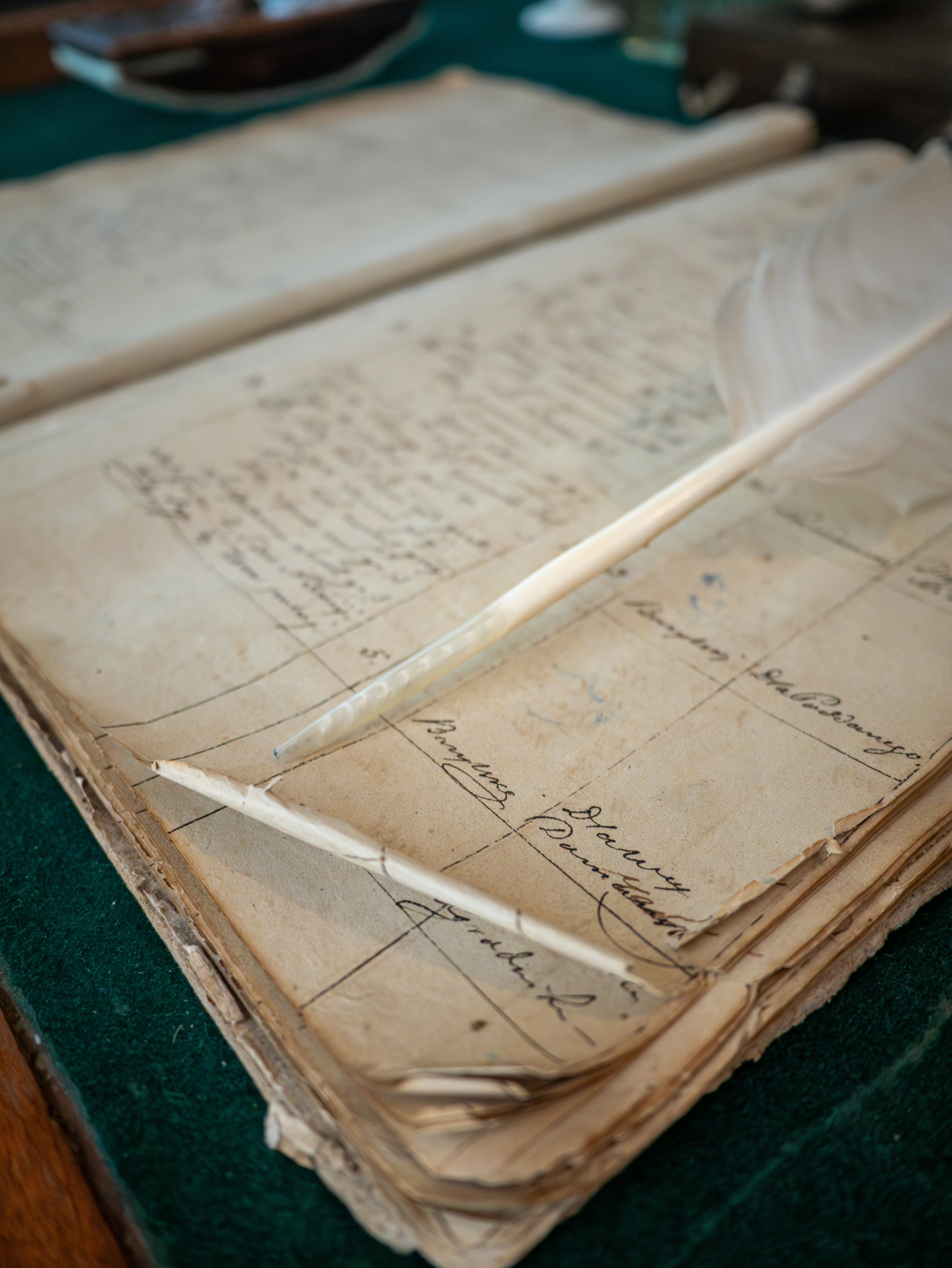
The Old way of recording who owned what
A piece of ground I used to own sits in Montana, hard against the edge of Glacier. People assumed it was farmland when I said I owned land there. Nothing about it was tidy enough to farm.
It was a place where three worlds met. The Pacific forest came in from the west, dark and close. The alpine tundra came down off the peaks. And the Great Plains ran up against all of it from the east, dry and windblown, held back from the mountains by nothing but a rain shadow. You could stand in one spot and see all three: lodgepole and Douglas fir behind you, mixed-grass prairie ahead, limber pine bent along the ridges where the wind never lets up.
I thought a great deal, standing there, about what it meant to own such a place. I think about it more now that I have sold it.
The lodgepole pine carries its seed in a cone sealed shut with resin. The cone can hang on the branch for years, closed, waiting. It opens only in fire. The tree gives up its future to the one thing that looks like ruin, and trusts the heat to do what no season could.
You cannot put that in a ledger.
When I sold it, the land passed the way land has always passed. A deed signed across a desk. A name struck out and another written in. A stack of paper that meant exactly what it said. It changed hands cleanly, with nothing held back, and no one able to reach in afterward and reverse it. That is one of the last kinds of ownership we have left.
This series is about the deed, not the land. About what it still means to own a thing outright, and to let it go outright, in a world quietly building a system where almost nothing will be owned that way again. And I will tell you plainly, before we begin, where I have landed. I think this is likely to go badly. Not certainly. But likely. Because the world we are building makes taking what people own easier than it has ever been in human history. Not only redefining it, though it does that too. Taking it. Freezing it, filtering it, switching it off, lifting it clean away. The thing that once required an army will soon require a keystroke.
* * *
Within living memory, the government decided that one thing Americans owned outright would no longer be theirs to hold.
In the spring of 1933, with the banks failing and the country frightened, Franklin Roosevelt signed an order forbidding citizens to hoard gold. Bring it to a Federal Reserve bank, take paper money at a price the government set, and do it by the first of May. The penalty for keeping your own gold was a fine large enough to ruin a family and ten years in prison.
It is remembered as a confiscation, and in law it nearly was. The truth is stranger. The order was riddled with exemptions. It was enforced by almost no one. There were no raids on homes. No agents drilling open the nation’s safe-deposit boxes. The lurid accounts of that came later, and they are invented. Milton Friedman and Anna Schwartz later tried to account for the gold. They found most of it had simply never come in. Only a fifth to a quarter was ever surrendered. The rest stayed where it was. Buried in yards. Hidden in floorboards. Kept.
Ordinary people could decline because the gold was physical, a thing you could close your hand around and put somewhere a government could not easily follow. The floorboard was the last refuge of the man who would not comply, and it held.
The rest of this series is, in a sense, about the day the floorboard disappears.
* * *
There is a longer catalogue of governments seizing what their people held, and some of its pages are very dark. I will set most of them aside. They teach the wrong lesson for this moment. The confiscations that came with force were the ones people could see, and flee, and hide from. I want to turn only one page, because it is mine.
My family is from Syria. We had people in Egypt as well, and the same thing reached Iraq. Anyone whose roots run through that part of the world grew up hearing what happened when the socialists came.
They did not call it theft. They called it justice. The redistribution of wealth. The return of what belonged to the people. Under that banner they took land that had passed through a family for generations, the olive terraces and the fields, the deeds that meant exactly what they said. They took the factories. They took the businesses a man had built with his hands and meant to leave to his sons. None of it was stolen, in their telling. It was simply redistributed, for the good of all.
It did not produce the good of all. It ruined the countries that did it. The wealth did not move to the poor. It evaporated, the way wealth does when no one is permitted to own it. And two generations later those nations are still poorer for it.
I heard the stories as a child. Men who learned in a single afternoon that everything their family had carried, from one careful hand to the next, was gone. Some of them did not survive the news. A heart simply stops, when a life’s inheritance is read out as someone else’s policy.
I tell you this so you know I am not theorizing from a comfortable distance. I know what it looks like when a state decides that what you own is now a question of permission. I know it was sold as fairness. I know the people who sold it believed, or said they believed, that they were setting men free.
That is the part worth remembering. The worst of it almost never arrives as theft. It arrives as justice, as efficiency, as progress, as a better arrangement for everyone.
But here is what I have come to see, and what I most want you to sit with. What my family lived through was the hard version. It took a government, and decrees, and enforcement, and men with the authority to come and take. It took time. It was resisted, evaded, survived. Wealth slipped through the cracks of it, because the cracks were everywhere, because taking things by force is clumsy and slow and leaks at every seam.
We are building the version with no cracks.
When your house is a token and your money is programmable and your name is a credential that grants or denies you access to both, the act that once needed an army needs a line of code. No decree. No soldiers. No afternoon of terror at the door. One instruction, applied to one account or to a million at once, from a desk, by someone you will never meet. The confiscation my family survived was expensive and friction-filled and resistible. The one we are building is cheap, frictionless, and complete.
I want to be precise, because this is where the careless lose the argument. No one is building a confiscation machine. They are building a convenience machine, and it is a marvel. But a convenience that can lift everything you own with a keystroke is a confiscation machine the moment anyone decides to use it that way. The capacity is the danger, not the intention. We are assembling the most powerful instrument of dispossession ever made, and we are doing it without once asking who will hold it after the people who built it are gone.
I want to be careful here, because the loudest voices on this subject reach immediately for villains. I do not. No conspiracy is needed for any of it. If the cage gets built, villains will not be the ones who build it. It will go up one reasonable step at a time, adopted freely, sold as freedom, until stepping out is no longer practical and you cannot point to the day anyone chose it. The question was never the technology. It is who holds the keys, and whether the rest of us are awake while those keys are cut.
* * *
This series will not traffic in fear. It also refuses the easy comfort, the one that says this cannot reach us here.
There is an older idea, one the world has nearly forgotten. That we never truly owned anything to begin with. That the land was lent to us, that we are stewards and not masters, that everything passes through our hands on its way to the next pair of hands. I believe something like that. But there is a vast distance between holding a thing in trust, from God, or from time, or from those who will come after, and holding it at the pleasure of a platform that can withdraw it while you sleep. The first is humility. The second is servitude. We are being asked to mistake one for the other.
I sold my land with a deed, cleanly, the old way. A name struck out, another written in, nothing held back. The generation coming after me will not sell theirs the same way. And they may not notice the moment the floor beneath them quietly becomes a permission.
That is the thing I mean to write about. Not whether this world is being built. It is being built. Whether anyone will be awake when it finishes.
Very powerful and necessary to speak about in our times, dear Nazem. I am grateful that you took so grounded approach to talk about it.
Clear, deep and amazingly well written, as usual. The unfortunate thing is that these destructive and corrupt populist ideas that devour the most sacred right, the right of ownership, are still being recycled in that part of the world.